


Quick Answer: Understanding Marine Hatch Hardware
A marine hatch is not just a cover — it is a complete system designed to provide reliable access while protecting internal compartments from water intrusion, salt spray, and harsh marine conditions.
The main hardware components of a marine hatch include:
- Hatch Hinges — provide smooth opening and reliable support for the hatch lid.
- Hatch Latches — secure the hatch and help maintain a tight seal.
- Pull Handles — provide convenient operation while keeping the deck surface safe.
- Gas Spring Brackets — support assisted opening for larger or heavier hatch lids.
For marine applications, 316 stainless steel hardware is widely preferred due to its excellent corrosion resistance, durability, and low maintenance requirements, especially in saltwater environments.
| Component | Primary Function | Key Selection Criteria | Typical Applications |
| Hatch Hinge | Connects the hatch lid and frame for smooth movement | Material strength, corrosion resistance, mounting style | Deck hatches, anchor lockers, engine compartments |
| Hatch Latch | Secures the hatch and maintains sealing pressure | Compression performance, flush design, locking options | Weather decks, storage lockers, fish boxes |
| Pull Handle | Provides an easy lifting point for hatch operation | Flush design, grip comfort, low-profile installation | Deck access, livewells, storage compartments |
| Gas Spring Bracket | Supports gas struts for controlled hatch opening | Load capacity, mounting position, durability | Large hatches, engine compartments |
What Is Marine Hatch Hardware?
A marine hatch system consists of several parts working together to provide safe access and reliable protection.
A typical hatch assembly includes:
- Hatch Frame — the structural base installed into the deck.
- Hatch Lid — the cover panel made from materials such as fiberglass, aluminum, or acrylic.
- Seal Gasket — creates a barrier against water intrusion.
- Hardware Components — hinges, latches, handles, and brackets that control operation.
While the hatch panel provides the main protection, the hardware determines how smoothly the hatch operates and how reliably it performs over time.
Main Components of Marine Hatch Hardware
1. Marine Hatch Hinges
Hatch hinges connect the lid to the frame and allow controlled opening and closing.
Common types include:
- Continuous Piano Hinges
- Strap Hinges
- Friction Hinges
- Heavy-Duty Marine Hinges
When selecting hatch hinges, consider:
- Hatch size and weight
- Opening frequency
- Installation space
- Exposure to saltwater
For marine environments, 316 stainless steel hinges provide excellent corrosion resistance and long-term durability.
 |
Marine cabinet hatch hinge, stainless steel 316 silica sol precision casting, stronger than forged hinge,resistant to seawater corrosion
100% pure hand polishing, 4 polishing procedures, and finally polished with cloth wheel Beautiful surface The hinge is made of stainless steel 316 precision casting, which ensures the door can be properly shut. High reliability, directly replace your worn or broken door hinge |
2. Marine Hatch Latches
Hatch latches secure the lid and help maintain a reliable seal.
Common options include:
- Compression latches
- Flush pull latches
- Lockable hatch latches
- Lift-ring style latches
Compression latches are commonly used for exterior hatches because they pull the lid tightly against the gasket, helping prevent water leakage during rain, spray, and deck washing.
Important selection factors include:
- Sealing performance
- Flush installation design
- Ease of operation
- Locking requirements
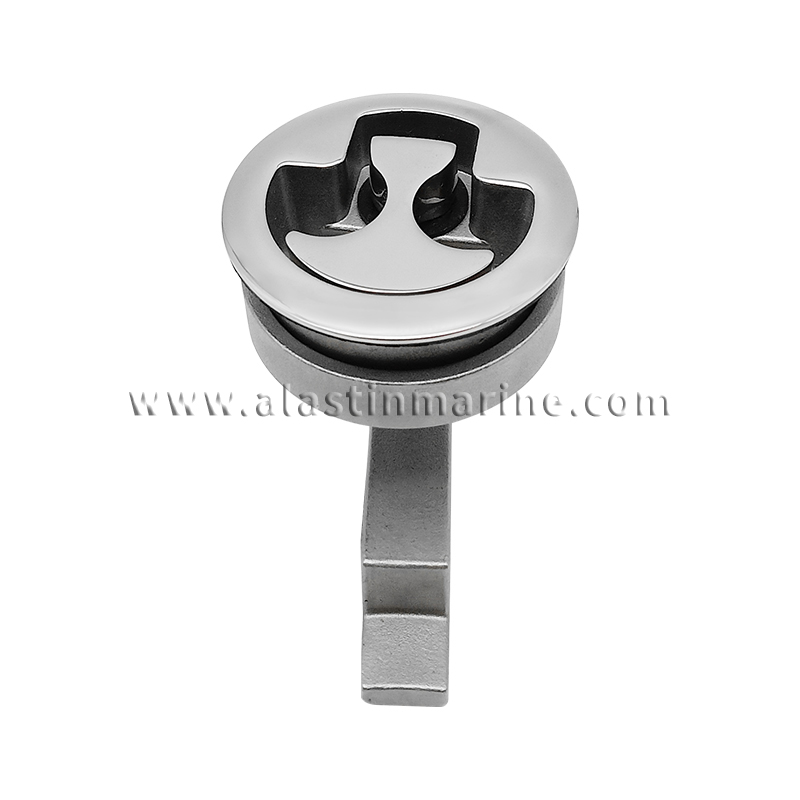 |
•Made from marine-grade 316 stainless steel, this flush mount hatch latch provides excellent resistance against saltwater corrosion, oxidation, and harsh marine environments. •The low-profile design allows seamless installation on boat hatches, •The concealed mounting structure reduces external protrusion and prevents accidental snagging, •Precision manufactured with a smooth polished surface, |
3. Marine Hatch Pull Handles
Pull handles provide a convenient way to open hatch lids while maintaining a clean deck surface.
Popular designs include:
- Flush pull handles
- Recessed ring handles
- Folding handles
For walking areas such as deck hatches, low-profile handles help reduce:
- Trip hazards
- Rope or equipment snagging
- Deck obstacles
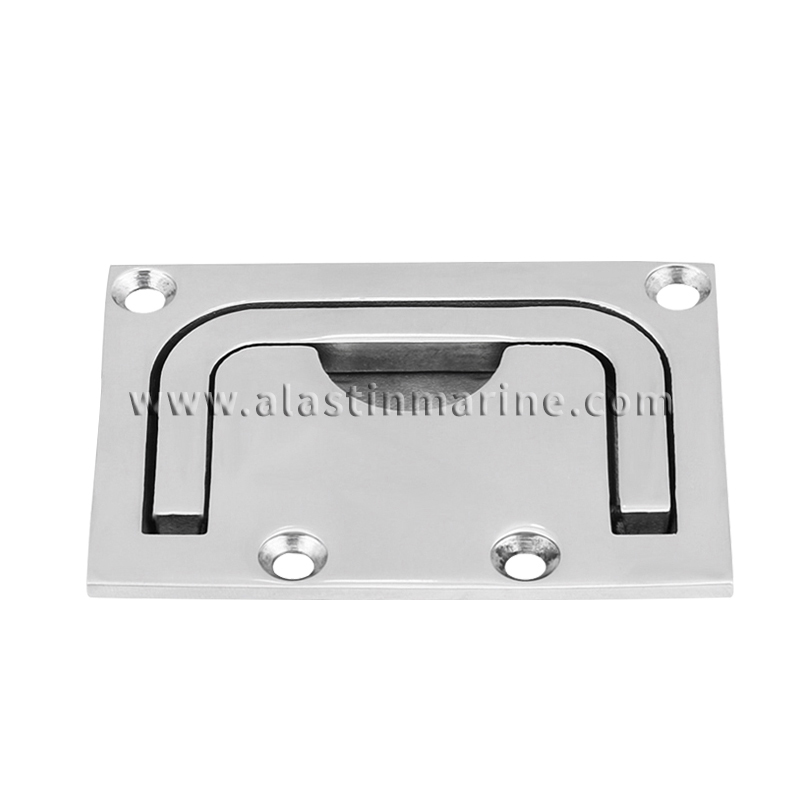 |
•Made from marine-grade 316 stainless steel, this flush mount hatch latch provides excellent resistance against saltwater corrosion, oxidation, and harsh marine environments. •The low-profile design allows seamless installation on boat hatches, deck panels, •Precision manufactured with a smooth polished surface, •The concealed mounting structure reduces external protrusion and prevents accidental snagging,
making it suitable for modern yacht and boat designs requiring a minimalist finish. |
4. Gas Spring Brackets
Large marine hatches can be heavy and difficult to operate manually.
Gas spring brackets are used together with gas struts to:
- Reduce opening effort
- Hold the hatch securely open
- Improve user safety
When selecting gas spring brackets, consider:
- Hatch weight
- Opening angle
- Installation position
- Load requirements
Proper bracket placement ensures smooth operation and prevents unnecessary stress on the hatch structure.
Choosing Marine Hatch Hardware by Application
Different boats and hatch locations require different hardware solutions.
Fishing Boats
Typical requirements:
- Compact installation
- Easy operation
- High corrosion resistance
Recommended hardware:
- Flush handles
- Compact hinges
- Stainless steel latches
Yachts and Recreational Boats
Typical requirements:
- Clean appearance
- Smooth operation
- Premium finish
Recommended hardware:
- Hidden or low-profile hinges
- Flush compression latches
- Polished stainless steel handles
Commercial Boats
Typical requirements:
- Heavy-duty performance
- Frequent operation
- Long service life
Recommended hardware:
- Reinforced hinges
- Heavy-duty latches
- High-strength stainless steel components
How to Choose the Right Marine Hatch Hardware
Before selecting hatch hardware, consider the following factors:
1. Material Selection
Marine hardware is exposed to:
- Saltwater
- Humidity
- UV exposure
- Temperature changes
316 stainless steel is commonly selected for marine applications because of its improved corrosion resistance compared with standard stainless steel grades.
2. Installation Environment
Consider where the hatch is located:
- Exterior deck areas require excellent sealing and corrosion resistance.
- Engine compartments require stronger hardware for heavier lids and vibration.
- Storage compartments require reliable operation and easy maintenance.
3. Hatch Size and Load
Larger hatch lids require:
- Stronger hinges
- More durable mounting hardware
- Properly selected gas spring brackets
Choosing hardware based only on appearance may lead to premature wear or poor operation.
Common Mistakes When Choosing Hatch Hardware
Selecting the Wrong Material
Hardware exposed to saltwater environments requires proper corrosion resistance. Using unsuitable materials may result in surface corrosion and reduced service life.
Ignoring Installation Requirements
Even high-quality hardware may not perform correctly if:
- Mounting dimensions are incorrect
- Hardware size does not match the hatch
- Installation structure is insufficient
Focusing Only on Price
Marine hardware is a long-term investment. Lower-cost components may increase maintenance requirements and replacement frequency.
Why Choose 316 Stainless Steel Marine Hatch Hardware?
316 stainless steel is widely used in marine environments because it offers:
- Excellent saltwater corrosion resistance
- High durability
- Premium appearance
- Low maintenance requirements
For boat builders, distributors, and marine equipment suppliers, reliable stainless steel hardware helps improve product quality and customer satisfaction.
OEM Marine Hatch Hardware Solutions
Alastin Marine provides stainless steel marine hatch hardware solutions for boat builders, distributors, and OEM customers.
Our capabilities include:
- Custom marine hardware design
- Stainless steel casting and manufacturing
- Surface finishing options
- OEM/ODM production support
From hatch hinges and latches to flush handles and gas spring brackets, Alastin Marine supplies durable hardware components designed for demanding marine applications.
Post time: Aug-14-2026